Stanley Korman


Stanley Korman
-
This article was published in Australian Dictionary of Biography, Volume 17, (MUP), 2007
Stanley Korman
Stanley Korman (1904-1988), industrialist, property developer and entrepreneur, was born on 27 August 1904 at Radom, Poland, a manufacturing town 60 miles (97 km) south of Warsaw, second of seven children of Abraham Korman and his wife Malka, née Tschaikovsky.
The Journey
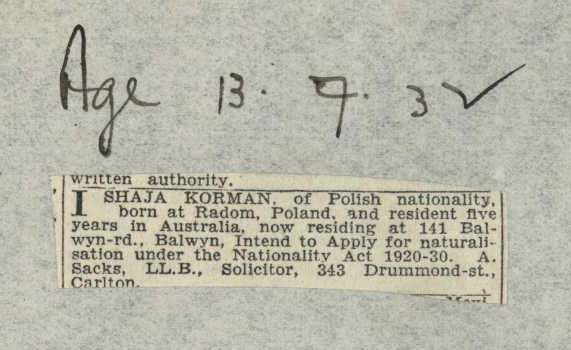
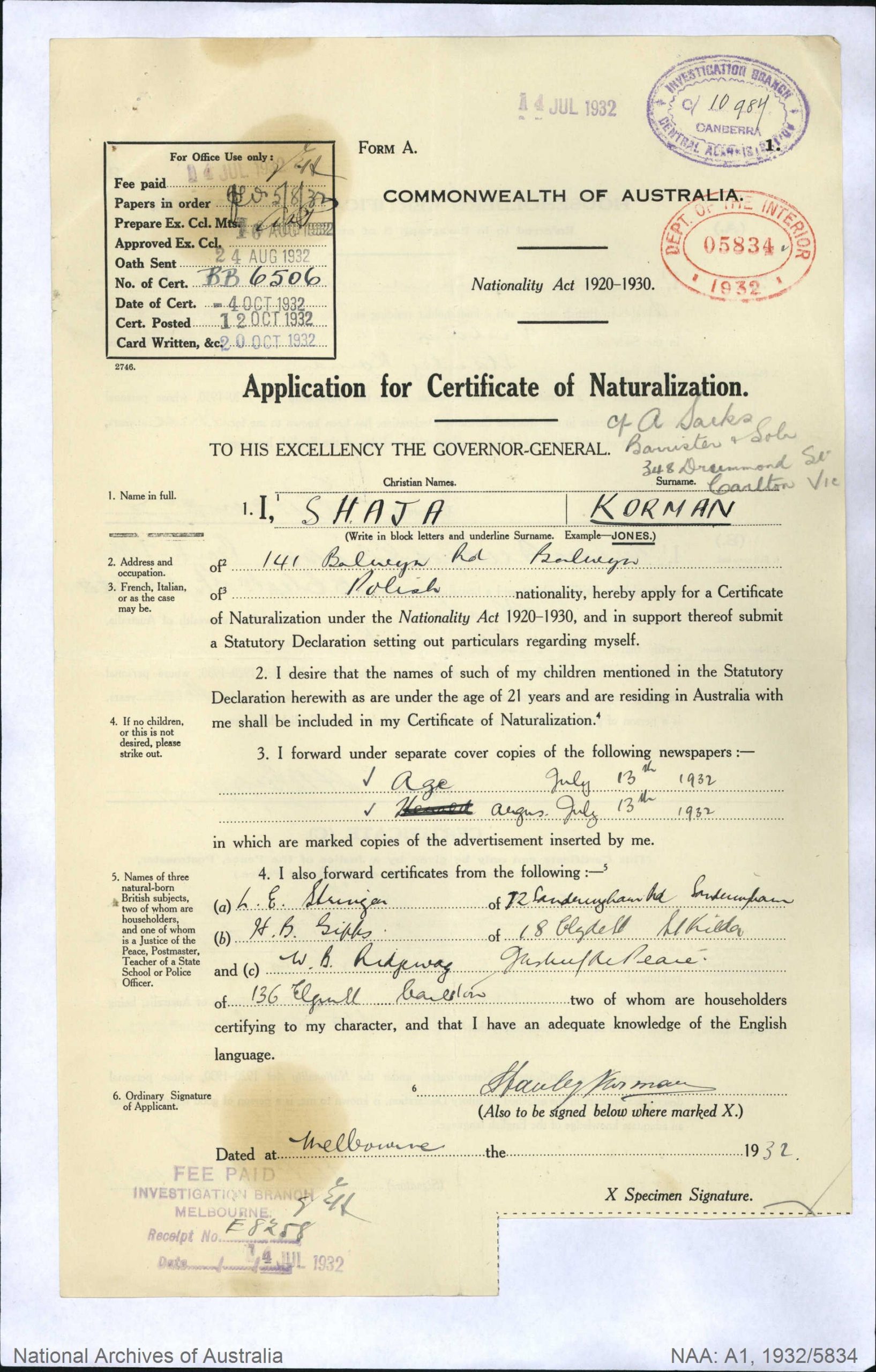
Named Shaja, he was educated at a Jewish school and was fluent in several languages besides Polish, including Russian and Hebrew. Poor living conditions and anti-Jewish attitudes in Poland persuaded the family to move in 1925 to Palestine, where they established a candle-making business. Within two years Korman migrated to Australia, in search of better prospects. Arriving in Melbourne on 6 June 1927, he adopted the name Stanley. First he obtained a labouring job at Australian Glass Manufacturers Co. Ltd, Spotswood, and later he became a presser in a Brunswick hosiery mill. On 10 September 1930 at the Jewish Synagogue, East Melbourne, he married English-born Sylvia Lazarus.
Naturalised on 28 October 1932, Korman set up a small hosiery business at North Carlton, soon renamed Centenary Woollen Mills Pty Ltd. In 1935-39 he brought his father and other family members to Australia. His firm moved to a larger mill at Bentleigh in 1939 and in World War II enjoyed profitable defence contracts. In 1945 he formed a family company, Stanhill Pty Ltd, its name deriving from a combination of his own name and that of his brother Hilel; the headquarters were at 34 Queens Road. He sold Centenary in 1948.

Korman has been described by Trevor Sykes as `short and dapper in a pinstripe suit and meticulously trimmed pencil moustache’, and as having `boundless vision and energy’. When visiting Miami, Florida, United States of America, in 1952, he was impressed with the artificial island developments and the international-standard hotels. Next year Stanhill acquired the Chevron Hotel, near Queens Road, and in 1955 Scott’s Hotel in the city. The Korman family bought up several thousand acres at Broadmeadows in 1954–58 and 750 acres (304 ha) at Heidelberg in 1958 for housing developments. At Surfers Paradise, Queensland, Korman developed Chevron Island and the Paradise Island canal estate and built the first stage of the Chevron Hotel (opened in 1958). By 1959 construction of the Chevron Hotel, Sydney, and further stages of the Surfers Paradise hotel were under way.
Not content with these projects, in late 1957 Stanhill Holdings Ltd had acquired Automobile Finance Co. of Australia Ltd, renamed next year Factors Ltd. Factors soon had controlling interests in the clothing chain stores Rockman’s Showrooms Ltd and Roger David Pty Ltd, and in Queensland Mines Ltd. Returning to his pre-war textile interests, in 1960 Korman arranged for Factors to take over Holeproof Industries Ltd, Holeproof Industries Ltd (New Zealand) and Australian Knitting Mills Ltd. By 1960 he presided over a group of 150 companies with interlocking share holdings and board memberships. In 1956-61 corporate assets grew from £2.3 million to £54.3 million.
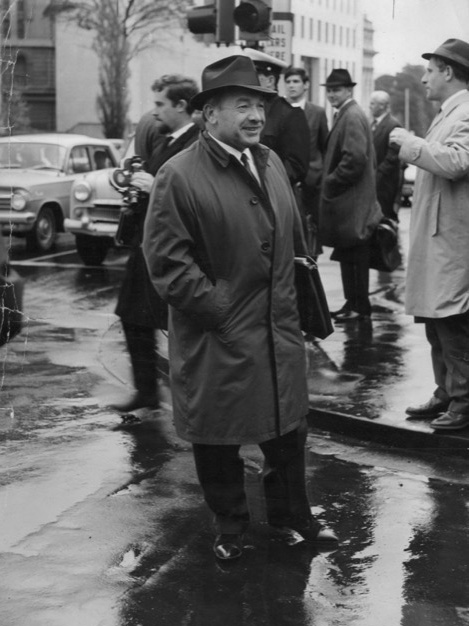
Portrayed in the press in the 1950s as an imaginative and successful entrepreneur, Korman took risks that ultimately collided with the duties inherent in running public companies. The Federal government’s credit squeeze in 1960 dealt Stanhill and Factors a severe blow: valuations of their properties fell; a too rapid expansion of Rockman’s into junior department stores incurred heavy trading losses; and the Sydney Chevron had been over-capitalised. Shares in Stanhill Consolidated Ltd fell from a high of 23 shillings to five pence by 1963 and that year Factors went into receivership. In 1964 he was charged with authorising the issue of a false prospectus. The Victorian government commissioned three reports by Peter Murphy, QC, into Stanhill and Factors, all with adverse findings and all particularly critical of Korman, whom Murphy found `unprincipled and untrustworthy’. Shareholders had lost about £24 million. Korman was convicted on 26 October 1966, and sentenced to six months’ gaol. Losing a court appeal and harbouring considerable bitterness at being singled out, he served four and a half months.
On his release Korman’s family persuaded him to start afresh in the USA. Aged 63, he began again at Phoenix, Arizona, and Las Vegas, Nevada, building a hotel, several supermarkets, mobile-home parks and office developments. Back in Queensland in 1985, he was warmly welcomed as the man who had put Surfers Paradise on the map. He planned new ventures there but, after adverse reportage by southern newspapers, returned to America in 1986. Survived by his wife and sons, he died on 26 July 1988 at Las Vegas and was buried in a Chevra Kadisha cemetery, Melbourne. The cardiovascular diagnostic centre at the Alfred Hospital, Melbourne, which he funded in 1959, and the Korman wing of the Mount Scopus (War Memorial) College, Burwood, were named after him.